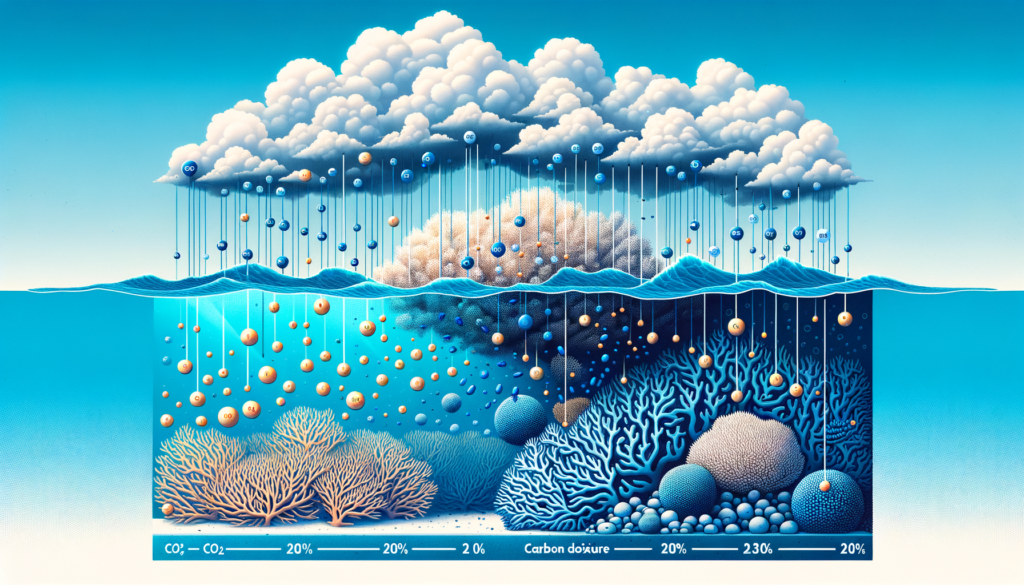
The ocean has absorbed roughly 30% of the carbon dioxide released by human activities since the industrial revolution. While this has helped slow global warming, it comes at a significant cost: ocean acidification.
The Chemistry of Ocean Acidification
When CO2 dissolves in seawater, it forms carbonic acid, lowering the ocean’s pH. Since pre-industrial times, ocean acidity has increased by about 30%. This might not sound like much, but for marine organisms, it represents a dramatic environmental shift.
Which Species Are Most Affected
Organisms that build shells or skeletons from calcium carbonate are most vulnerable. This includes:
- Coral reefs
- Oysters, mussels, and clams
- Sea urchins
- Pteropods (sea butterflies)
- Some plankton species
More acidic water makes it harder for these organisms to build and maintain their calcium carbonate structures. In severe cases, shells can actually begin to dissolve.
Ripple Effects Through the Food Web
Pteropods, tiny swimming snails, are a crucial food source for salmon, herring, and whales. As pteropod populations decline due to acidification, the effects ripple up the food chain, affecting fish populations and the communities that depend on them.
What Can Be Done
The primary solution is reducing CO2 emissions. Our advocacy work focuses on pushing for stronger climate policies and supporting the transition to renewable energy. Every reduction in emissions helps slow the pace of acidification.